Sunday, October 12, 2014

Multiplicity as Identity


In Life on the Screen, Sherry Turkle introduces the idea of multiplicity as the human identity in the chapter on Identity Crisis. Multiplicity is the effect of our communities and other social constructs, real and virtual, on our persona. She states that traditional understanding and interpretations of the healthy human personality as rigid and immobile has been replaced by the notion of adaptability and fluidity, and as a result our identities are a conglomeration of many smaller personalities. Another part of her argument that is interwoven in multiplicity is the “saturated self” as the source of our constant deconstruction and reconstruction of our identity. Turkle compares this idea to Hindu culture based on similarities in the belief that many things influence a person.

The depiction of multiple gods representing one entity. Credit: scribbleofayoungartist.


In modern Western societies today, the whole person strives to fulfill his or her various parts. In our fast-paced and ever-changing world, the ability to adapt to different situations proves to be favorable. The idea of a person engaging their whole self is even highly regarded in the media and has led to the popularization of activities, such as yoga, that only a few decades were practiced by a small section of the population. The belief that one needs to feed the mind, body and soul is rooted in multiplicity, and many people today are taking efforts to develop the whole self than in previous generations.
credit: lacunaloft.com/try-yoga

In its social context, multiplicity serves not only as an individual’s identity, but rather, it can be definitive of whole social groups and classes. In a special series a couple of years ago, Samuel Staley from NPR discussed the fluidity and mobility of the middle class. In the face of economic disparity, the middle class finds itself deconstructing and reconstructing, and essentially creating a new identity that meets social changes.

These examples of multiplicity in the media enhance Turkle's position on the importance of multiplicity as the human identity. As inhabitants of a world so multi-faceted, it only makes sense that the human identity reflects such complexity. 

Thursday, November 21, 2013

Rise of the Honey Badger


In a chapter of A New Literacies Sampler titled ‘Online Memes, Affinities, and Cultural Production’, the author illustrates the parameters for a meme as well as several examples of qualifying pieces of media. Although he is careful to clarify that a meme does not need to be media (memes have existed far longer than modern technology) today’s memes are generally viral media content that spread quickly from person to person, not unlike the biological spread of a virus.  According to Richard Dawkins, a meme must have longevity, fidelity, and fecundity in order to be successful; that is, the length it can survive, its replicability, and the rate the meme is copied and spread.
One example of a popular meme is the video “The Crazy Nastyass Honey Badger” narrated by Randall, which has over 63 million views on YouTube.


           The video consists of footage from a nature documentary about the honey badger with a humorous voiceover by Randall. It went viral after being posted in 2011, even being referenced in television and by famous athletes who announced they would emulate the honey badger’s attitude of  “take what you want regardless of others” and “Honey Badger don’t give a shit”. There were several similar videos preceding “The Crazy Nastyass Honey Badger”, but none of them received as much media attention as Honey Badger did. They were all variations on the theme of a comedic voiceover of nature documentary excerpts, some examples of which are “I Hate Nature” and  “Fuck Planet Earth”.


 “I Hate Nature” is considered by Know Your Meme to be the earliest precursor to Honey Badger. However, “Spiders on Drugs” is also reminiscent of the Honey Badger video’s style, and was uploaded in 2006 with currently over 34 million views on YouTube. “The Crazy Nastyass Honey Badger” video itself has not changed over the years, however, due to its success and viral spread the narrator created a series of similar videos titled “Randall’s Wild Wild World of Animals”. Randall has also created commercials in the same narrative style and narrated a commercial for the television show Mythbusters, among other things.

            “The Crazy Nastyass Honey Badger” video fits Dawkins’ parameters of meme success; fidelity, longevity, and fecundity. Due to its unique narration style the video is certainly memorable, and the layout (comedic voiceover to nature scenes) is easily replicated by others who may wish to create similar videos. It certainly was not difficult for Randall, as “Randall’s Wild Wild World of Animals” has over 160 videos, some of which feature Randall singing popular songs in the same tone and style he used for Honey Badger, titled “Honey Badger Sings”. Other users have created songs and remixes to the Honey Badger video, and a series of photographic memes have also sprung up.


            The video also possesses longevity; even though it is no longer so viral, it is still a highly viewed video and views continued to spike a year after its release. More so, its longevity exists in the people who have seen the video; although it is likely better known among young people, a huge number of people know what Honey Badger refers to and likely will for a long time. Finally, its fecundity is undeniable; it spread quickly from erson to person, largely due to its carefree comedic element. Additionally, since the video is only 3 ½ minutes long, it was not difficult for people to show their friends which also contributed to its spread.

Wednesday, November 20, 2013

Google vs. the Government

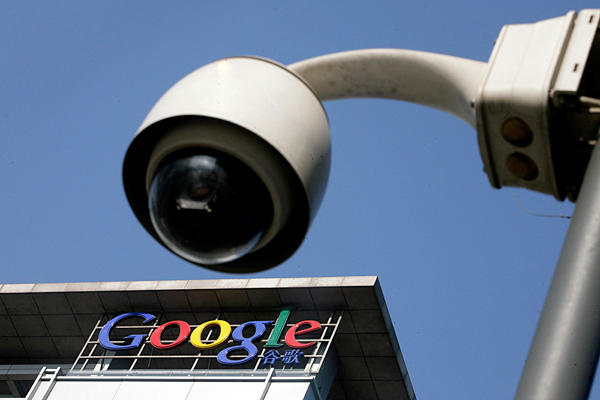
In his chapter “The Googlization of Us” from his book The Googlization of Everything, Siva Vaidhynathan focuses on the way in which Google takes advantage of its users by gathering their personal information and using it to profit. Some users are unaware of this data collection, and would have to sift through a lengthy privacy policy to discover what they’re actually sharing with the tech giant. Regarding this privacy policy, Vaidhynathan says “If you read the privacy policy carefully, it’s clear that Google retains the right to make significant decisions about our data without regard for our interests” He further argues that any semblance of privacy or protection of users is built on the potential to profit off of them, and if that potential were to disappear likely so would that protection. Overall he paints a largely negative view of Google, claiming that, although the company provides useful and free features to its users, like any company its main goal is to make money. If that involves collecting large amounts of user data and tracking their searches, so be it.

After this year’s events surrounding the NSA’s surveillance habits, people have started paying more attention to the government’s level of interest in their lives. They would probably not be surprised then to find that government requests to Google foruser data have drastically increased in the past three years. Google isn’t shy about publicizing this information, either. Although the corporation makes it clear that some information they are legally prohibited from sharing, it has published the statistics for each country’s government data requests, and how many produce the data. The United States is in the lead by far with almost 11,000 requests within 6 months, followed by India with 2,600. The US also produces data in more cases than every country listed; about 84% of the time. Some requests, apparently, they are not allowed to publish, such as those related to the Foreign Intelligence Surveillance Act, and so these numbers may not be entirely accurate. One thing seems certain though, which is that Google is not happy with this arrangement. It seems to resent the fact that it not only has to hand over its data, but is not allowed to fully report on exactly what it handed over. Considering the fact that Google has done its fair share of surveillance, one must wonder why exactly it is so bothered now.


As Vaidhynathan made clear in his chapter “The Googlization of Us”, Google has no qualms about collecting its users’ data. Although there are options to minimize the amount of data collected and tracking preformed, it is not the default and many users are unaware of it. It is also impossible to eradicate data collection fully. Given this, it might seem a bit hypocritical for Google to get so upset over the Government requesting data and then not letting them publish all the statistics. After all, how much does Google publicize its own data collection statistics? In this situation, Google also comes away seeming like the protagonist who is valiantly defending the citizens of the United States against the Government’s unjust and infringing surveillance practices, which seems rather convenient: they get to clean up their image and harp on the Government, which lately everyone loves to do. What could go wrong? Perhaps it’s unfair to be so hard on Google. After all, Google users accept the privacy policy when they use its services (whether they know what it entails or not), whereas they have no knowledge nor can they give consent when the Government requests their data. However, let one more thing be said: most of the Government’s requests to Google are subpoenas and warrants, and thus related to legal proceedings, where Google was making them out to be random requests for an average citizen’s browsing history. 

Google: Surf at Your Own Risk

           Imagine the day you go online, type in Google’s web URL, and find its page blank. Next you search for Yahoo!, Bing, Ask – or any other well known search engine – to find that its web pages also lead to a dead end. What now? How are you going to verify whether or not Miley Cyrus smoked a joint onstage at last night’s EMAs? What about the growth on your foot? How are you going to find out if it’s cancerous or not? As a college student, I use Google heavily for its academic and entertainment purposes; yet it is our society’s reliance on Google that is a bit problematic.

          Google plays a greater role in our lives much more than we think it does. In Siva Vaidhyanathan’s book, The Googlization of Everything, he explains that Google impacts our social lives, the way we retain knowledge, and our privacy. Google dominates our lives through the number of platforms it owns: Gmail, Blogger, StreetView, GooglePlus, and now, YouTube. Our present generation lives in a culture where we view Google as a ‘seal of validity’; after all, it’s only true if it’s on Google, right? So far, Google sounds like a life saver. The services they offer are free and its technology makes our lives easier, online and offline. But it is actually all that great? Vaidhyanathan argues that our participation with Google comes with a sacrifice: our privacy. Google's default privacy settings are set to maximize the benefits of the company. For those unaware, this means that the patterns, locations and content of our searches are logged. Google's success comes from the participation of its consumer base. It uses our data to perfect its 'search algorithm' to better order its web searches.

          On March 1, 2012, Google updated its privacy settings to share the data it collected about users between all of its platforms. Prior to that, Google's web searches has always been cordoned off from its other products. This protection was important because search data can reveal sensitive information about a user, including age, race, sex, health, and religion. Recently, Google proposed yet another plan that will further expose our personal information. These new privacy settings will allow Google to share its users' data with ad companies; thus, increasing Google's ad revenue, but more importantly, further exposing its consumers' once "private" information.

           Google begins to sound more and more like a death trap. On one hand, Google's mission is to organize information and create better service; on the other hand, it is continuously updating its privacy settings to further expose its users. More eloquently put, Marc Rotenberg, director of the online privacy group EPIC, argues that Google users "shouldn't have to go back and restore their privacy defaults every time Google makes a change." A simple search of 'Google + Websearch + Privacy' shows more links in relation to how users can protect themselves against Google's privacy settings than anything else. Clearly, it's time for a wake up call. Google continuously tests our tolerance with every new push; ergo, the new question becomes, "How much do we care about privacy? and "Do we need Google?'


           Users can opt out from most of the Google-related dilemmas I mentioned above by continuously updating their personal privacy settings. If we are worried enough about the effects of publicizing user data, then we should take care to check our account settings once in a while. But an easier solution to this problem is to eliminate Google altogether. In this day, this world, and this age, life without Google seems a bit impossible. This is mainly because Google is becoming synonymous with the Web itself. Vaidhyanathan brings up another point that our lives are becoming so reliant on Google that it is starting to impact our knowledge - what we know and learn. In a way, Google is the 'glass wall' of the American society - it is changing the way we process information and the way we learn. As Nicholas Carr explains to us in his article, 'Is Google Making Us Stupid?', our reliance on computers to understand the world is problematic. The current young-adult generation is adopting a 'We know only what is on Google' mantra. Our reliance on Google causes us to sacrifice something not only within ourselves, but most importantly, something within our culture.

Honeypots and Piracy

In the chapter “Six Faces of Piracy” by Ramon Lobato, Lobato discusses digital piracy within the context of theft, free enterprise, free speech, authorship, resistance and access. Aside from the section on theft, his portrayal takes on a largely neutral and sometimes positive form, leading the reader to believe he is likely not opposed to piracy, or at least does not actively advocate against it. Since the MPAA propagates a one-sided, completely negative view of piracy and is almost equally opposed by  pro-piracy advocates, Lobato’s expansion of piracy from its two dimensional playing field is refreshing. However, even though his commentary on the societal implications of piracy within a subtly technologically oppressed regime is insightful, people still tend to focus almost exclusively on piracy as theft. In fact, some people will go to great lengths to reinforce this concept, as one company has revealed.

                                                 
        Recently, the owner of the file-sharing site UploaderTalk.com revealed that the site was a honeypot designed to accumulate information about users and the file and web hosts. It has since been purchased by the anti-piracy company Nuke Piracy, and the owner claims to be working for the company now.  The owner, WDF, seems quite proud of his operation, declaring “I collected info on file hosts, web hosts, websites. I suckered shitloads of you”. WDF used to be a moderator of another file-sharing site, WJunction, where members could make money from uploading content. It is unclear if members could do the same at UploaderTalk, but based on the small member population (around a thousand) it seems unlikely. WDF has not yet announced what will be done with the information gathered during the sites one-year run, but it is likely not going to be good for its members. It seems obvious that WDF and Nuke Piracy take the viewpoint of piracy as theft, however, in congratulating themselves they have conveniently avoided the fact that UploaderTalk encouraged piracy.

UploaderTalk would've been a Facilitator
        Until it was announced that UploaderTalk had been a honeytrap, it had been a file-sharing website where members could upload and download largely pirated content. According to WDF, this certainly constitutes theft and is therefore wrong. However, he does not take into account that he is the one who made it all possible; he created the site, therefore he enabled all the activities that occurred under its domain. Doesn't this make him guilty as well? He went to great lengths to set up an operation that would “catch” distributors of pirated content, but in the process he ensured that content would be accessible to more people. The MPAA makes the issue of piracy seem like “good guy” versus “bad guy”, with them and their anti-piracy counterparts playing the roles of “good guys” in their attempt to expunge piracy from the face of the Earth. However, as WDF has proved, it is rarely that simple. As Lobato pointed out, the financial losses to the media industry due to piracy, while often exaggerated, remain substantial. Isn’t there a better way for anti-piracy groups to go about their mission without deceiving and entrapping users who are completely unaware of their ulterior motives? Two wrongs don’t make a right, and here it looks like no one comes out on top. 

Tuesday, November 19, 2013

Rise of the Honey Badger

In a chapter of A New Literacies Sampler  titled ‘Online Memes, Affinities, and Cultural Production’, the author illustrates the parameters for a meme as well as several examples of qualifying pieces of media. Although he is careful to clarify that a meme does not need to be media (memes have existed far longer than modern technology) today’s memes are generally viral media content that spread quickly from person to person, not unlike the biological spread of a virus.  According to Richard Dawkins, a meme must have longevity, fidelity, and fecundity in order to be successful; that is, the length it can survive, its replicability, and the rate the meme is copied and spread.
One example of a popular meme is the video “The Crazy Nastyass Honey Badger” narrated by Randall, which has over 63 million views on YouTube.


           The video consists of footage from a nature documentary about the honey badger with a humorous voiceover by Randall. It went viral after being posted in 2011, even being referenced in television and by famous athletes who announced they would emulate the honey badger’s attitude of  “take what you want regardless of others” and “Honey Badger don’t give a shit”. There were several similar videos preceding “The Crazy Nastyass Honey Badger”, but none of them received as much media attention as Honey Badger did. They were all variations on the theme of a comedic voiceover of nature documentary excerpts, some examples of which are “I Hate Nature” and  “Fuck Planet Earth”.

                                    
 “I Hate Nature” is considered by Know Your Meme to be the earliest precursor to Honey Badger. However, “Spiders on Drugs” is also reminiscent of the Honey Badger video’s style, and was uploaded in 2006 with currently over 34 million views on YouTube. “The Crazy Nastyass Honey Badger” video itself has not changed over the years, however, due to its success and viral spread the narrator created a series of similar videos titled “Randall’s Wild Wild World of Animals”. Randall has also created commercials in the same narrative style and narrated a commercial for the television show Mythbusters, among other things.

            “The Crazy Nastyass Honey Badger” video fits Dawkins’ parameters of meme success; fidelity, longevity, and fecundity. Due to its unique narration style the video is certainly memorable, and the layout (comedic voiceover to nature scenes) is easily replicated by others who may wish to create similar videos. It certainly was not difficult for Randall, as “Randall’s Wild Wild World of Animals” has over 160 videos, some of which feature Randall singing popular songs in the same tone and style he used for Honey Badger, titled “Honey Badger Sings”. Other users have created songs and remixes to the Honey Badger video, and a series of photographic memes have also sprung up.


            The video also possesses longevity; even though it is no longer so viral, it is still a highly viewed video and views continued to spike a year after its release. More so, its longevity exists in the people who have seen the video; although it is likely better known among young people, a huge number of people know what Honey Badger refers to and likely will for a long time. Finally, its fecundity is undeniable; it spread quickly from erson to person, largely due to its carefree comedic element. Additionally, since the video is only 3 ½ minutes long, it was not difficult for people to show their friends which also contributed to its spread.