Sunday, November 23, 2014

LOL or LoL or lOl or a combination of the three?

There are many different forms of language within the world. From taking a cultural anthropology course at Lawrence University, I have learned many languages have different roots, sub languages, and different forms of communication than originally intended to have. One particular Language subset is LOLspeak and my question for today is, why people may choose to participate in such language play? 
LOLspeak is a playful variety of English that shows complex and multi-faceted manipulation of Standard English for entertaining ends. That is one of the reasons why people have taken on the concept, it is entertaining. Its used in many forms of entertainment, such as chat rooms, video game chat rooms, memes and more. LOLspeak is a fun and creative way for individuals to express their ideas for their community and others to enjoy. For example, there are many memes that use LOLspeak to allow their viewers to laugh and in hope spread the meme so it can reach other people even more: 

LOLcat meme with LOLspeak parodying pop song from Miley Cyrus "Party in the U.S.A" 


Fry from hit animated television show "Futurama", with popular meme that has many twists. This particular one has to do with LOLspeak.
Additionally, people choose to participate because of the communities that can be formed around LOLspeak. Many sub cultures have created their own communities in following of LOLspeak such as LOLlinguistics, LOLpresidents and even more. 

I agree with this reasoning to why people partake in this Language play. Growing up me and my friends would say it without even realizing what we were saying was LOLspeak. Terms Pwned, and murff were explicitly visible within our vocabulary. We used to have fun enjoying the terms that we picked up and the secondhand meanings we would give them. All because of LOLspeak, my friends and I would be able to have fun and bonding moments, which is why many people would chose to participate in the language play. 
  

#societalissues

Society is changing at a rapid rate. With rapidly growing and newly built technology, humanity has new ways of communicating with one another that has never imagined. That method is social media. A gathering of people online that allows them to post, blog, comment, share videos text and pics,  and more as they please. With this new outlet of discussion that is commonly becoming the norm, one may question, is social media the proper means of communicating between one another?

In May, I wrote an article for the Lawrentian (Lawrence University's school newspaper) on the subject of rape culture on campus and how it affects students. I mentioned two fraternities that live on campus in events -one having members accused of rape and one whose group home students have been raped in- that made rape culture exist and it immediately backfired all on social media. The amount of emails, facebook messages and posts, and fake profiles to stalk me, was immense. The subjects of the content I recieved are as followed:
                       - I am idiot
                       - I am idiot for ever thinking that it was okay for allowing something like that to ever be written
                       - I should die
                       - I should save humanity and never write again 
                       - I should watch where I am going and keep the eyes on the back of my head
                       - I have the writing capacity of a six year old and never write again
Those are the few that stood out amongst the hatemail that I have recieved. Social media is a bad means of communicating due to being hidden. Many of the messages I have recieved was anonymous, allow the messenger to say anything that they feel and I will never be able to know who it was. This is a common feature on social media and because of it many people feel safe enough to say anything that they want regardless of the intent. Due to that feature of communication I was hurt countless times over. If social media was not the norm of communicating for the generation and did not certain feature, nothing that would have happened. 

Howard Rheingold's article "Participatory Power" focuses one of the five social media literacies, participation and how it should used in society for users to voice their opinions. Participation occurs when the user interacts with the tool, the tool being the online source they are using. Participating allows a user to feel different then they normally would in real life by being an active consumer instead of watching passively. When you have a significant amount of people who are able to be active and apart of there online settings you then have a  paritcipatory culture. Twitter, and other sites are prime examples of people participating online and transforming the way they protest and speak about issues. With use of the hashtag, people around the globe can share, comment, view, and blog about important issues. #Ferguson, #IAmRepublican, #Whiteculture, and more are ways participatory culture is clearly shaping our views on political matters and trying to find ways to solve them. When you look at social media in this light, it can be an overly good thing. Social media will always be a two-sided coin, one for the proper way to use it and one for those who misuse it and take advantage of the potential they could have.

Wednesday, November 5, 2014

Participatory Culture: If Facebook changed, would our use of it change?

Facebook is one the most popular social networking sites. 
Facebook is one of the most popular social media networks around the world.  It is used as a networking space on the internet to connect friends and family from all over.  You are able to share and "like" things that you see from the web.  This is Facebook as we know it, but Facebook has been criticized before for their unclear privacy policy.  Facebook allows much of its content to be public to different advertisers and companies.  This appeared to make many Facebook users upset, but it is still currently the most popular social network in the United States.  Different blogs and reports have come to light that Facebook and Google have been giving away data information to government agencies.  Although there was bickering, not many people left the network.  I cannot help but ask, how far can Facebook go before we change how we use it?
Are people leaving Facebook?
In Howard Rheingold's Net Smart: How to Thrive Online, he gives an ideology behind a participatory culture and a look into the blogsphere of the internet.  Rheingold says "Facebook's long history of changing the privacy settings for its users and the sensitivity of the information that search engines know about people's search histories are just two examples of specific qualities of technologies that influence the way people use Facebook or search--and effect the consequences of those activities."  Rheingold is arguing that since the public knows about the change in Facebook privacy settings, it will influence them on how they share information.  Although I do believe that the policy changes have influenced the public, I do not think that there has been, nor will be a huge change in how we use it.  Facebook could do almost anything and no one would bat an eyelash.
This is a picture of the messages that users received from Facebook mobile about changing the app.

In September, Facebook had warned users that their messaging system was moving to a completely different app.  I was hesitant to get the app since I didn't have substantial memory left on my phone. Then I heard rumors that the new messenger app will read your texts and give data to advertisers.  I didn't believe it until the day my warnings shut off and messaging was no longer a part of the Facebook app.  I had to choose between downloading the app, or run to a laptop when I was notified that I had a message.  I thought that this was utterly ridiculous of Facebook to want to change when it was fine for years.  I thought I wouldn't be alone in this, until I realized that 325 of my friends had the app.  I was astonished that no one cared.  I was set on not downloading the app.  Upon talking to friends they found it weird as well, but that did not stop them from downloading it and giving the app permission to message their friends.
Snapshot of the Facebook Messenger app's home page on Google Play Store with a recent comment.

Rheingold said that Facebook's policies would have an influence on how we use Facebook and search on the web, but I am positive he didn't mean that they would change the very structure of how users communicate.  Rheingold meant that the users would change how we used Facebook based on the level of privacy and changes that they made.  Based on the number of my Facebook friends who have the app, I would disagree.  In fact, I looked at the app to see how many people have downloaded it and over 10 million users have (see picture).  Facebook pushed the envelope with this big move to multiple accounts and it seems that no one noticed.  I argue, that no matter what privacy policies or structural changes Facebook or any search engine makes, the users will not change how they use them.

Meme Famous

Before analyzing memes in class I always thought that they were pictures that people from the internet copied and put a funny caption on.  After reading Knobel and Lankshear's chapter in A New Literacies Sampler, I know that it is much more than that.  Memes can be popular tunes, catchphrases, fashion, actions, icons, jingles and anything else that can be uploaded.  They are "contagious patterns of 'cultural information' that get passed from mind to mind and directly generate and  shape the mindsets and significant forms of behavior and actions of a social group."  New memes pop up everyday and with social media like Facebook and Twitter, they are getting around faster than ever before.  Memes usually center around a specific person or group of people.  Knobel and Lankshear used the example of The Star Wars Kid to explain that many subjects of memes receive unwanted attention.  In the case of the Star Wars Kid, internet users put his name online and many contacted him in ridicule and bullying.  He and his family did not appreciate the extra attention and saw it as an invasion of privacy.  Knobel and Lankshear went on to explain that not not all attention that subjects from memes are welcomed.


The famous meme "confused black girl" starring Keisha Johnson.
A remixed picture of Keisha as a meme.
The meme, confused black girl, began with a picture of a friend that went insanely viral and appeared on many news feeds.  Kiesha Johnson is pictured making a face and putting up a hand gesture.  This picture was remixed and is now used in meme's and in people's daily conversations.  Initially, it was assumed that Keisha hated people using her picture.  It was my first time acknowledging that those who participate in memes, may not actually be participating voluntarily.  A video emerged of Kiesha asking people to stop posting her face everywhere.  Then a rumor went out saying that she was suing Instagram for using her photo.  Then suddenly I came across a video of her embracing it! This vulgar comedic Youtube video shows Keisha using the gesture multiple time for comedic value. The Youtube channel she is featured on knew that having her would have benefits for his video.  She was using the attention that she gathered from the internet meme to benefit.

Keisha is not the only one who has been benefiting from their fame as a meme star. Antoine Dodson is another individual who used his stardom from internet memes to land him on the George Lopez show.  Sweet Brown, another meme star, did an interview on the View.  These may be very popular memes, but they all show aspects of thee stars using their stardom to benefit.
Antoine Dodson's news interview that went viral.

Antoine Dodson a guest on Lopez tonight.
The Star Wars Kid did not benefit from his meme according to Knobel and Lankshear, but I do believe that most stars of memes do benefit, it just depends on whether they accept it or not.  Keisha initially appeared to disapprove of internet users taking her picture, but then she made parody starring herself and doing the famous gesture.  It seems as though she merely made the most out of a situation, but she used her meme as a foundation for this parody.  She was able to benefit from this parody simply because of the meme.  The same could be said for the Star Wars Kid. Knobel and Lankshear mentioned that the Star Wars Kid was offered an Apple IPOD from internet users, but he declined.  That was potentially a benefit, that he and his family did not accept.  Meme stardom, in some cases, may not be the ideal type of fame that people are looking for, but it does not insinuate that there is no benefit to be gained.

Sunday, October 12, 2014

Multiplicity as Identity


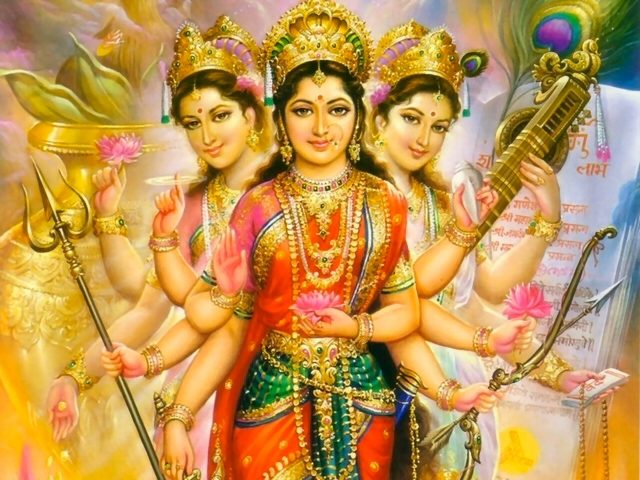
In Life on the Screen, Sherry Turkle introduces the idea of multiplicity as the human identity in the chapter on Identity Crisis. Multiplicity is the effect of our communities and other social constructs, real and virtual, on our persona. She states that traditional understanding and interpretations of the healthy human personality as rigid and immobile has been replaced by the notion of adaptability and fluidity, and as a result our identities are a conglomeration of many smaller personalities. Another part of her argument that is interwoven in multiplicity is the “saturated self” as the source of our constant deconstruction and reconstruction of our identity. Turkle compares this idea to Hindu culture based on similarities in the belief that many things influence a person.

The depiction of multiple gods representing one entity. Credit: scribbleofayoungartist.


In modern Western societies today, the whole person strives to fulfill his or her various parts. In our fast-paced and ever-changing world, the ability to adapt to different situations proves to be favorable. The idea of a person engaging their whole self is even highly regarded in the media and has led to the popularization of activities, such as yoga, that only a few decades were practiced by a small section of the population. The belief that one needs to feed the mind, body and soul is rooted in multiplicity, and many people today are taking efforts to develop the whole self than in previous generations.
credit: lacunaloft.com/try-yoga

In its social context, multiplicity serves not only as an individual’s identity, but rather, it can be definitive of whole social groups and classes. In a special series a couple of years ago, Samuel Staley from NPR discussed the fluidity and mobility of the middle class. In the face of economic disparity, the middle class finds itself deconstructing and reconstructing, and essentially creating a new identity that meets social changes.

These examples of multiplicity in the media enhance Turkle's position on the importance of multiplicity as the human identity. As inhabitants of a world so multi-faceted, it only makes sense that the human identity reflects such complexity. 

Thursday, November 21, 2013

Rise of the Honey Badger


In a chapter of A New Literacies Sampler titled ‘Online Memes, Affinities, and Cultural Production’, the author illustrates the parameters for a meme as well as several examples of qualifying pieces of media. Although he is careful to clarify that a meme does not need to be media (memes have existed far longer than modern technology) today’s memes are generally viral media content that spread quickly from person to person, not unlike the biological spread of a virus.  According to Richard Dawkins, a meme must have longevity, fidelity, and fecundity in order to be successful; that is, the length it can survive, its replicability, and the rate the meme is copied and spread.
One example of a popular meme is the video “The Crazy Nastyass Honey Badger” narrated by Randall, which has over 63 million views on YouTube.


           The video consists of footage from a nature documentary about the honey badger with a humorous voiceover by Randall. It went viral after being posted in 2011, even being referenced in television and by famous athletes who announced they would emulate the honey badger’s attitude of  “take what you want regardless of others” and “Honey Badger don’t give a shit”. There were several similar videos preceding “The Crazy Nastyass Honey Badger”, but none of them received as much media attention as Honey Badger did. They were all variations on the theme of a comedic voiceover of nature documentary excerpts, some examples of which are “I Hate Nature” and  “Fuck Planet Earth”.


 “I Hate Nature” is considered by Know Your Meme to be the earliest precursor to Honey Badger. However, “Spiders on Drugs” is also reminiscent of the Honey Badger video’s style, and was uploaded in 2006 with currently over 34 million views on YouTube. “The Crazy Nastyass Honey Badger” video itself has not changed over the years, however, due to its success and viral spread the narrator created a series of similar videos titled “Randall’s Wild Wild World of Animals”. Randall has also created commercials in the same narrative style and narrated a commercial for the television show Mythbusters, among other things.

            “The Crazy Nastyass Honey Badger” video fits Dawkins’ parameters of meme success; fidelity, longevity, and fecundity. Due to its unique narration style the video is certainly memorable, and the layout (comedic voiceover to nature scenes) is easily replicated by others who may wish to create similar videos. It certainly was not difficult for Randall, as “Randall’s Wild Wild World of Animals” has over 160 videos, some of which feature Randall singing popular songs in the same tone and style he used for Honey Badger, titled “Honey Badger Sings”. Other users have created songs and remixes to the Honey Badger video, and a series of photographic memes have also sprung up.


            The video also possesses longevity; even though it is no longer so viral, it is still a highly viewed video and views continued to spike a year after its release. More so, its longevity exists in the people who have seen the video; although it is likely better known among young people, a huge number of people know what Honey Badger refers to and likely will for a long time. Finally, its fecundity is undeniable; it spread quickly from erson to person, largely due to its carefree comedic element. Additionally, since the video is only 3 ½ minutes long, it was not difficult for people to show their friends which also contributed to its spread.

Wednesday, November 20, 2013

Google vs. the Government

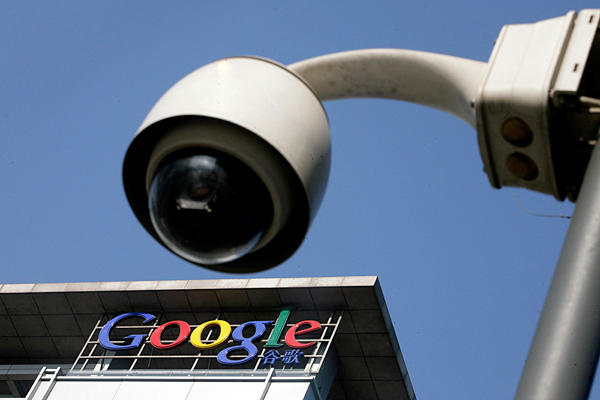
In his chapter “The Googlization of Us” from his book The Googlization of Everything, Siva Vaidhynathan focuses on the way in which Google takes advantage of its users by gathering their personal information and using it to profit. Some users are unaware of this data collection, and would have to sift through a lengthy privacy policy to discover what they’re actually sharing with the tech giant. Regarding this privacy policy, Vaidhynathan says “If you read the privacy policy carefully, it’s clear that Google retains the right to make significant decisions about our data without regard for our interests” He further argues that any semblance of privacy or protection of users is built on the potential to profit off of them, and if that potential were to disappear likely so would that protection. Overall he paints a largely negative view of Google, claiming that, although the company provides useful and free features to its users, like any company its main goal is to make money. If that involves collecting large amounts of user data and tracking their searches, so be it.

After this year’s events surrounding the NSA’s surveillance habits, people have started paying more attention to the government’s level of interest in their lives. They would probably not be surprised then to find that government requests to Google foruser data have drastically increased in the past three years. Google isn’t shy about publicizing this information, either. Although the corporation makes it clear that some information they are legally prohibited from sharing, it has published the statistics for each country’s government data requests, and how many produce the data. The United States is in the lead by far with almost 11,000 requests within 6 months, followed by India with 2,600. The US also produces data in more cases than every country listed; about 84% of the time. Some requests, apparently, they are not allowed to publish, such as those related to the Foreign Intelligence Surveillance Act, and so these numbers may not be entirely accurate. One thing seems certain though, which is that Google is not happy with this arrangement. It seems to resent the fact that it not only has to hand over its data, but is not allowed to fully report on exactly what it handed over. Considering the fact that Google has done its fair share of surveillance, one must wonder why exactly it is so bothered now.


As Vaidhynathan made clear in his chapter “The Googlization of Us”, Google has no qualms about collecting its users’ data. Although there are options to minimize the amount of data collected and tracking preformed, it is not the default and many users are unaware of it. It is also impossible to eradicate data collection fully. Given this, it might seem a bit hypocritical for Google to get so upset over the Government requesting data and then not letting them publish all the statistics. After all, how much does Google publicize its own data collection statistics? In this situation, Google also comes away seeming like the protagonist who is valiantly defending the citizens of the United States against the Government’s unjust and infringing surveillance practices, which seems rather convenient: they get to clean up their image and harp on the Government, which lately everyone loves to do. What could go wrong? Perhaps it’s unfair to be so hard on Google. After all, Google users accept the privacy policy when they use its services (whether they know what it entails or not), whereas they have no knowledge nor can they give consent when the Government requests their data. However, let one more thing be said: most of the Government’s requests to Google are subpoenas and warrants, and thus related to legal proceedings, where Google was making them out to be random requests for an average citizen’s browsing history. 

Google: Surf at Your Own Risk

           Imagine the day you go online, type in Google’s web URL, and find its page blank. Next you search for Yahoo!, Bing, Ask – or any other well known search engine – to find that its web pages also lead to a dead end. What now? How are you going to verify whether or not Miley Cyrus smoked a joint onstage at last night’s EMAs? What about the growth on your foot? How are you going to find out if it’s cancerous or not? As a college student, I use Google heavily for its academic and entertainment purposes; yet it is our society’s reliance on Google that is a bit problematic.

          Google plays a greater role in our lives much more than we think it does. In Siva Vaidhyanathan’s book, The Googlization of Everything, he explains that Google impacts our social lives, the way we retain knowledge, and our privacy. Google dominates our lives through the number of platforms it owns: Gmail, Blogger, StreetView, GooglePlus, and now, YouTube. Our present generation lives in a culture where we view Google as a ‘seal of validity’; after all, it’s only true if it’s on Google, right? So far, Google sounds like a life saver. The services they offer are free and its technology makes our lives easier, online and offline. But it is actually all that great? Vaidhyanathan argues that our participation with Google comes with a sacrifice: our privacy. Google's default privacy settings are set to maximize the benefits of the company. For those unaware, this means that the patterns, locations and content of our searches are logged. Google's success comes from the participation of its consumer base. It uses our data to perfect its 'search algorithm' to better order its web searches.

          On March 1, 2012, Google updated its privacy settings to share the data it collected about users between all of its platforms. Prior to that, Google's web searches has always been cordoned off from its other products. This protection was important because search data can reveal sensitive information about a user, including age, race, sex, health, and religion. Recently, Google proposed yet another plan that will further expose our personal information. These new privacy settings will allow Google to share its users' data with ad companies; thus, increasing Google's ad revenue, but more importantly, further exposing its consumers' once "private" information.

           Google begins to sound more and more like a death trap. On one hand, Google's mission is to organize information and create better service; on the other hand, it is continuously updating its privacy settings to further expose its users. More eloquently put, Marc Rotenberg, director of the online privacy group EPIC, argues that Google users "shouldn't have to go back and restore their privacy defaults every time Google makes a change." A simple search of 'Google + Websearch + Privacy' shows more links in relation to how users can protect themselves against Google's privacy settings than anything else. Clearly, it's time for a wake up call. Google continuously tests our tolerance with every new push; ergo, the new question becomes, "How much do we care about privacy? and "Do we need Google?'


           Users can opt out from most of the Google-related dilemmas I mentioned above by continuously updating their personal privacy settings. If we are worried enough about the effects of publicizing user data, then we should take care to check our account settings once in a while. But an easier solution to this problem is to eliminate Google altogether. In this day, this world, and this age, life without Google seems a bit impossible. This is mainly because Google is becoming synonymous with the Web itself. Vaidhyanathan brings up another point that our lives are becoming so reliant on Google that it is starting to impact our knowledge - what we know and learn. In a way, Google is the 'glass wall' of the American society - it is changing the way we process information and the way we learn. As Nicholas Carr explains to us in his article, 'Is Google Making Us Stupid?', our reliance on computers to understand the world is problematic. The current young-adult generation is adopting a 'We know only what is on Google' mantra. Our reliance on Google causes us to sacrifice something not only within ourselves, but most importantly, something within our culture.

Honeypots and Piracy

In the chapter “Six Faces of Piracy” by Ramon Lobato, Lobato discusses digital piracy within the context of theft, free enterprise, free speech, authorship, resistance and access. Aside from the section on theft, his portrayal takes on a largely neutral and sometimes positive form, leading the reader to believe he is likely not opposed to piracy, or at least does not actively advocate against it. Since the MPAA propagates a one-sided, completely negative view of piracy and is almost equally opposed by  pro-piracy advocates, Lobato’s expansion of piracy from its two dimensional playing field is refreshing. However, even though his commentary on the societal implications of piracy within a subtly technologically oppressed regime is insightful, people still tend to focus almost exclusively on piracy as theft. In fact, some people will go to great lengths to reinforce this concept, as one company has revealed.

                                                 
        Recently, the owner of the file-sharing site UploaderTalk.com revealed that the site was a honeypot designed to accumulate information about users and the file and web hosts. It has since been purchased by the anti-piracy company Nuke Piracy, and the owner claims to be working for the company now.  The owner, WDF, seems quite proud of his operation, declaring “I collected info on file hosts, web hosts, websites. I suckered shitloads of you”. WDF used to be a moderator of another file-sharing site, WJunction, where members could make money from uploading content. It is unclear if members could do the same at UploaderTalk, but based on the small member population (around a thousand) it seems unlikely. WDF has not yet announced what will be done with the information gathered during the sites one-year run, but it is likely not going to be good for its members. It seems obvious that WDF and Nuke Piracy take the viewpoint of piracy as theft, however, in congratulating themselves they have conveniently avoided the fact that UploaderTalk encouraged piracy.

UploaderTalk would've been a Facilitator
        Until it was announced that UploaderTalk had been a honeytrap, it had been a file-sharing website where members could upload and download largely pirated content. According to WDF, this certainly constitutes theft and is therefore wrong. However, he does not take into account that he is the one who made it all possible; he created the site, therefore he enabled all the activities that occurred under its domain. Doesn't this make him guilty as well? He went to great lengths to set up an operation that would “catch” distributors of pirated content, but in the process he ensured that content would be accessible to more people. The MPAA makes the issue of piracy seem like “good guy” versus “bad guy”, with them and their anti-piracy counterparts playing the roles of “good guys” in their attempt to expunge piracy from the face of the Earth. However, as WDF has proved, it is rarely that simple. As Lobato pointed out, the financial losses to the media industry due to piracy, while often exaggerated, remain substantial. Isn’t there a better way for anti-piracy groups to go about their mission without deceiving and entrapping users who are completely unaware of their ulterior motives? Two wrongs don’t make a right, and here it looks like no one comes out on top. 

Tuesday, November 19, 2013

Rise of the Honey Badger

In a chapter of A New Literacies Sampler  titled ‘Online Memes, Affinities, and Cultural Production’, the author illustrates the parameters for a meme as well as several examples of qualifying pieces of media. Although he is careful to clarify that a meme does not need to be media (memes have existed far longer than modern technology) today’s memes are generally viral media content that spread quickly from person to person, not unlike the biological spread of a virus.  According to Richard Dawkins, a meme must have longevity, fidelity, and fecundity in order to be successful; that is, the length it can survive, its replicability, and the rate the meme is copied and spread.
One example of a popular meme is the video “The Crazy Nastyass Honey Badger” narrated by Randall, which has over 63 million views on YouTube.


           The video consists of footage from a nature documentary about the honey badger with a humorous voiceover by Randall. It went viral after being posted in 2011, even being referenced in television and by famous athletes who announced they would emulate the honey badger’s attitude of  “take what you want regardless of others” and “Honey Badger don’t give a shit”. There were several similar videos preceding “The Crazy Nastyass Honey Badger”, but none of them received as much media attention as Honey Badger did. They were all variations on the theme of a comedic voiceover of nature documentary excerpts, some examples of which are “I Hate Nature” and  “Fuck Planet Earth”.

                                    
 “I Hate Nature” is considered by Know Your Meme to be the earliest precursor to Honey Badger. However, “Spiders on Drugs” is also reminiscent of the Honey Badger video’s style, and was uploaded in 2006 with currently over 34 million views on YouTube. “The Crazy Nastyass Honey Badger” video itself has not changed over the years, however, due to its success and viral spread the narrator created a series of similar videos titled “Randall’s Wild Wild World of Animals”. Randall has also created commercials in the same narrative style and narrated a commercial for the television show Mythbusters, among other things.

            “The Crazy Nastyass Honey Badger” video fits Dawkins’ parameters of meme success; fidelity, longevity, and fecundity. Due to its unique narration style the video is certainly memorable, and the layout (comedic voiceover to nature scenes) is easily replicated by others who may wish to create similar videos. It certainly was not difficult for Randall, as “Randall’s Wild Wild World of Animals” has over 160 videos, some of which feature Randall singing popular songs in the same tone and style he used for Honey Badger, titled “Honey Badger Sings”. Other users have created songs and remixes to the Honey Badger video, and a series of photographic memes have also sprung up.


            The video also possesses longevity; even though it is no longer so viral, it is still a highly viewed video and views continued to spike a year after its release. More so, its longevity exists in the people who have seen the video; although it is likely better known among young people, a huge number of people know what Honey Badger refers to and likely will for a long time. Finally, its fecundity is undeniable; it spread quickly from erson to person, largely due to its carefree comedic element. Additionally, since the video is only 3 ½ minutes long, it was not difficult for people to show their friends which also contributed to its spread.

The Penguin in Us All

At one time or another, everyone has felt like they just don’t fit in. The Socially Awkward Penguin puts these feeling into words in just the right way.


This meme is a part of the Advice Animals that are easily recognized by their colorful background and their animal at the center. This one specifically “features a penguin lacking both social skills and self-esteem” (Know Your Meme). The words usually are centered around uncomfortable situations that end in “an exceptionally clumsy or inelegant response.”

The original image of the penguin comes from the National Geographic’s Wild Animals site on a fact sheet on Adéli penguins. This meme began appearing on 4chan as early as 2009 following the popularity of Advice Dog and Courage Wolf. In May, an anonymous user named the penguin as the Socially Awkward Penguin, and the name stuck. From there, SAP was used liberally in 4chan in various different boards, which means a lot of people were able to connect with it, or simply understood the comedy of That Awkward Moment. It jumped to Reddit on September 25th, 2009, when a poster was seeking assistance for his anxiety. Another user, parttimehuman, used the reference to reassure him that he wasn't the only one that felt it.


After this use, various different websites began to use the SAP, such as Buzzfeed, Smosh, Facebook, and blogs such as this one. As it is inevitable for memes to remain untouched, numerous reversals were created, the most notable ones being the Socially Average Penguin, and the Socially Awesome Penguin.


There have also been hybrids created, turning up with the “Socially Awesome Awkward Penguin” which begin really well, but then things go downhill.


The reason I chose this meme is because I feel that even though it began in 2009, the meme itself and the humor it presents is still relatable and enjoyable. Richard Dawkins’ model of a good meme requires three things; fidelity, fecundity, and longevity. Through some discussion in class, we decided to adjust these terms to replicability, intertextuality, and durability. I find the SAP to follow these three requirements very closely. For one thing, it is very easy to find multiple social situations in real life that can translate to the SAP which makes it easy to replicate it in various forms. Next, everyone has had that situation where they hope that no one has seen.


Finally, the awkwardness of life is still around after 4 years, and as long as humans have social rules, people will inevitably stumble their way through all of them. I just love the SAP because he allows us to laugh at what might have regretted. When a meme can turn something uncomfortable into laughter that many people can share, it means it has succeeded. The Socially Awkward Penguin has succeeded.


Sunday, November 10, 2013

What I Think I Do

                It is hard to imagine technology in the 21st century having biological characteristics. It is even harder to imagine the TV, internet, or radio having more biological similarities to a plant than a plastic cup would. In Epic Win For Anonymous, Cole Stryker explains how popular information travels across the internet. He argues that a meme behaves like “an interactive, living organism,” and participates in a competitive environment. Like real world organisms, memes also have life spans that are determined by a few factors: longevity, substance, audience, and most importantly, memorability. Thousands of memes are created on the daily, yet only a small percentage are continuously circulated throughout the web. To understand Stryker’s “memetic ecosystem” module, let’s take a look at the life cycle of this meme.


                  I found this meme and shared it on Facebook July 2012. By the end of the day, only five people from my humble group of 900 friends “liked” the post. The lack of people “liking” my post made sense: firstly, all five of them are lifeguards and secondly, the context of the post wouldn’t have been funny to people who have never lifeguarded. Memes are a form of social currency. Popular memes like ‘Awkward Penguin’ and ‘Philosoraptor’ cater to a larger audience – they generate a larger pool of social currency because more people can relate to them. The most important factor that makes a meme successful is its memorability. Memorable memes are able to survive in the virtual and real world. A successful meme is shared through conversation between high school students in a cafeteria. In short, if you’re meme isn’t talked about, it has reached the end of its lifecycle.  

                This particular Lifeguarding meme isn’t popular outside the global circle of lifeguards, but the format of it is. This meme is popular because of its format and the flexibility it provides. The pattern is simple: pick a noun and find six pictures that depict stereotypes associated with the group of people (though sometimes it is applicable in other situations) described in the header. Beneath the images, you write what so-and-so thinks you do - it can be what your mother thinks you do, what the president thinks you do, or what Smokey the Bear thinks you do. The point is: it doesn't matter as long as what you write follows this pattern:" starting with "what ___________ thinks I do" for the first five panels and ending with "what I actually do" for the last one. In this example, the meme's layout is what makes it popular and memorable; however, the significance is not entirely there. Like a virus, a meme is able to morph and adapt to the different communities (or in biological terms, "environments") it finds itself in.


                 According to KnowYourMeme, the "What People Think I Do/What I Really Do Meme" was created in February 2012. The first of it's kind was a meme directed towards science majors; therefore, at the beginning of the meme's life cycle, its social currency was only applicable towards science students. As more versions of this meme were created and shared, its social currency was applicable to a wider range of audiences. A meme grows as a plant does: given the right condition and environment, it is able to grow, thrive, and sustain itself until it dies. While a plant dies from the lack of nutrition or age, a meme dies when it has lost its audience. This analogy relates nicely back to Stryker's explanation of his memetic ecosystem and his point that memes can relate back to biology more so than one would think. Is technology a more complex imitation of biology?

Thursday, November 7, 2013

The Inevitable Pirate

In Ramon Lobato's piece Shadows of Cinema, in the chapter "Six Faces of Piracy," he makes the point that the legal doctrine on copyright considers it to be "a compromise between producers and consumers" (71). This has remained the standard understanding towards copyright for so long, it may be causing the majority of the problems we see these days concerning copyright laws. Since copyright terms have been increasing over time and producers are trying to get a stronger grip on their creations, the compromise is beginning to stretch past each side's desired limit. What I mean by this is that as time passes, the different views of the compromise are becoming more skewed and complicated by the desires of the producers and the consumers.


A big reason for the compromise becoming so complicated is that consumers are no longer just that, they have now become producers as well. With the power and ease now provided by the internet, production has become more horizontal. Another factor that I believe muddles the matter is that our lives are inter-textual. Creativity often stems from inspiration, and inspiration can come from anywhere, including a copyrighted piece of work.


from the 1968 Romeo and Juliet
As a costume designer, I gather my inspiration from the play as well as themes I want to follow, feelings I wish to express, and ideas from other productions. Many times, I will gather together a collage of images to help focus my ideas, and on those collages can often be found other peoples' art or designs themselves. These images I then use as a guide for the actual costume I design myself.


Does this make my inspiration piracy? Does that mean that the costume I make based off of another person's idea belong to that person? I believe that it does not because we all must share our creativity. From the point of view of someone who wished to exist in the business of selling and creating, copyright can get pretty tricky, but I do strongly believe that creativity should never be sacrificed for the sake of any law.

Costume Design by Sophie Hernando Kofman (Juliet Act 1)
Collage for Juliet Act 1


Tuesday, November 5, 2013

The Sub-Memetic Ecosystem

Memetic ecology; Based on the term meme, coined by Dawkins, referring to the vast universe of cultural carriers, the cultural 'blood' of the world wide web. 

Memes are a unique neologism. The word is but 4 letters long and is used in casual daily parlance, yet encompasses a vast and vibrant living sphere of cultural values, norms, and niches. The tone of a meme is neutral, allowing for a variety of topics, themes, subgenres and inside jokes to be expressed in a cogent manner; a mere byte of media, be it a video, gif, image, or phrase.

This blog post proposes a new understanding of the ways in which the memetic ecology exists. Instead of one whole sphere of memes, there exists an ecosystem of cliques, each clique pandering to a niche of interest. These cliques can overlap with other cliques, just as human interests can vary between various things. Thus, each time a meme is viewed, it is processed in a unique way, one which is subjective to the recipient. This implies that the intent to communicate some specific message can be lost in translation quite easily, if the meme comes into the path of a recipient who is not of that memes clique.

The sub-memetic ecosystem then is a world in which offense is freely given and taken, accidentally or intentionally. It is a place in which a disparity between message-intent and message-receipt exists.

Just as a speaker of French is unable to communicate to a speaker of Swahili, memes can sometimes "go over someone's head", if a particular cultural reference is not known for example.

This blog post will take a look at how one meme in particular displays this idea of disparity between message-intent and message-receipt by examining the intent of the creator, the use of various media, the reception of the meme, and the aftermath of entering the sub-memetic ecosystem.

_________________________________________________________________________________

On the 6th of June, 2012, Laina Walker, AKA Laina Morris, AKA wzr0173 (on youtube.com), uploaded this video, a Justin Bieber fan tribute video. She changed the words of a popular rap song of the time and create a fictional character; a girlfriend who 'nags' her boyfriend incessantly and is reminiscent of a stalker.

Whilst her singing would never warrant a multi-million dollar contract, and her lyrical styling might be elementary at best, it was the character she portrayed that was memorable. That video generated 16 million views and 43,857 new subscriptions for her account; she had gone viral.
                                                                                                                 (snipped from youtube.com)
The various denizens of the internet were quick to react; a screenshot later and they had found their latest carrier, "the overly attached girlfriend":
                                                                                         (downloaded from generateallthememes app)
Laina had entered the sub-memetic ecosystem, now her likeness was at the mercy of internet. The screenshot of her face had become a carrier, some image freely available for use in any way the creator saw fit.
The image itself, sans wording, is neutral toned. It communicates very little, except maybe begging for a staring contest. It is uncontroversial, plain and unblemished.
Going viral, becoming a star on the internet, bode over well for Laina:
                                                                                              (snipped from her twitter account)
Yet, there were now two Lainas; the one grounded in reality, and the meme. Each would find new life by crossing through various levels of the sub-memetic ecosystem.

Reality-Laina would go on to follow the overly attached girlfriend meme-theme and capitalize her youtube popularity. She has gone on to host charity videos, enter online car competitions, win online car competitions, make q-and-a videos about her overly attached girlfriend persona and even reflect on her fame since the JB fan video.
Reality-Laina has also engaged in crossing through the sub-memetic ecosystem; by making videos with other meme-ers and making a video in the style of another meme. In this video she meets Jimmy Tatro ( a west-coast fraternity 'bro' who has his own hilarious channel), whilst in this video she meets the original bad luck brian (who is a meme too!). Following the style of the classic Iphone parodies on youtube, Laina uploaded this video that showcases her ability to mix her overly-attached girlfriend persona with another meme carrier.

We have see how, in real life, Laina has gained significant meme 'capital', the ability to stay relevant, milk her 'overly attached girlfriend' persona in other meme carriers, and mingle with other meme-ers. Her movements in the sub-memetic ecosystem have produced more content and thus more hilarity.

Meme-Laina, the carrier that was a screenshot of Reality-Laina's JB fan video, has a life independent of Reality-Laina's will. Reality-Laina has no control over the message installed in the carrier by 3rd party creators. In a tragically ironic twist, Reality-Laina loses control over her own image, whilst Meme-Laina embodies a spirit of free speech and expression. 

The carrier has various levels of usage. Here is an example of basic, to-the-point, and clear expression of the carrier, a good reconciliation of carrier and message.
Here is yet another example as described above, yet with a internet shock-game reference.
Here is an example that pushes the boundary, yet still only toes the line.

It became clear to fans and meme-ers that there was yet untapped gold in Lainas videos, and more screenshots emerged with variations of the overly attached girlfriend meme.

Here, here and here and examples of how other screenshots maintain some relation to the initial intent of the overly attached girlfriend meme but with specific nuances in each.
Here, here and here are examples of how other pictures of Laina, found on her Facebook account and Twitter account, have been used outside of the entire overly attached girlfriend context, yet with a redeeming quality that makes the recipient think of the first Laina meme.

Meme-Laina also produced an overly-attached boyfriend meme which lead to this photoshopped picture that puts both overly attached love interests together. 

As we can see, Meme-Laina spawned a myriad of other meme carriers and messages, thus leading us to understand that one meme can easily create other variations of itself, spreading out infinitely into the sub-memetic ecosystem as millions of different viewpoints create and receive this information.

Testament to the notion discussed above, it is rather telling that the original overly attached girlfriend meme is dropping in relevance online, possibly due to it's variations becoming more popular than the original. 


Written by Pravin M Jayasinghe